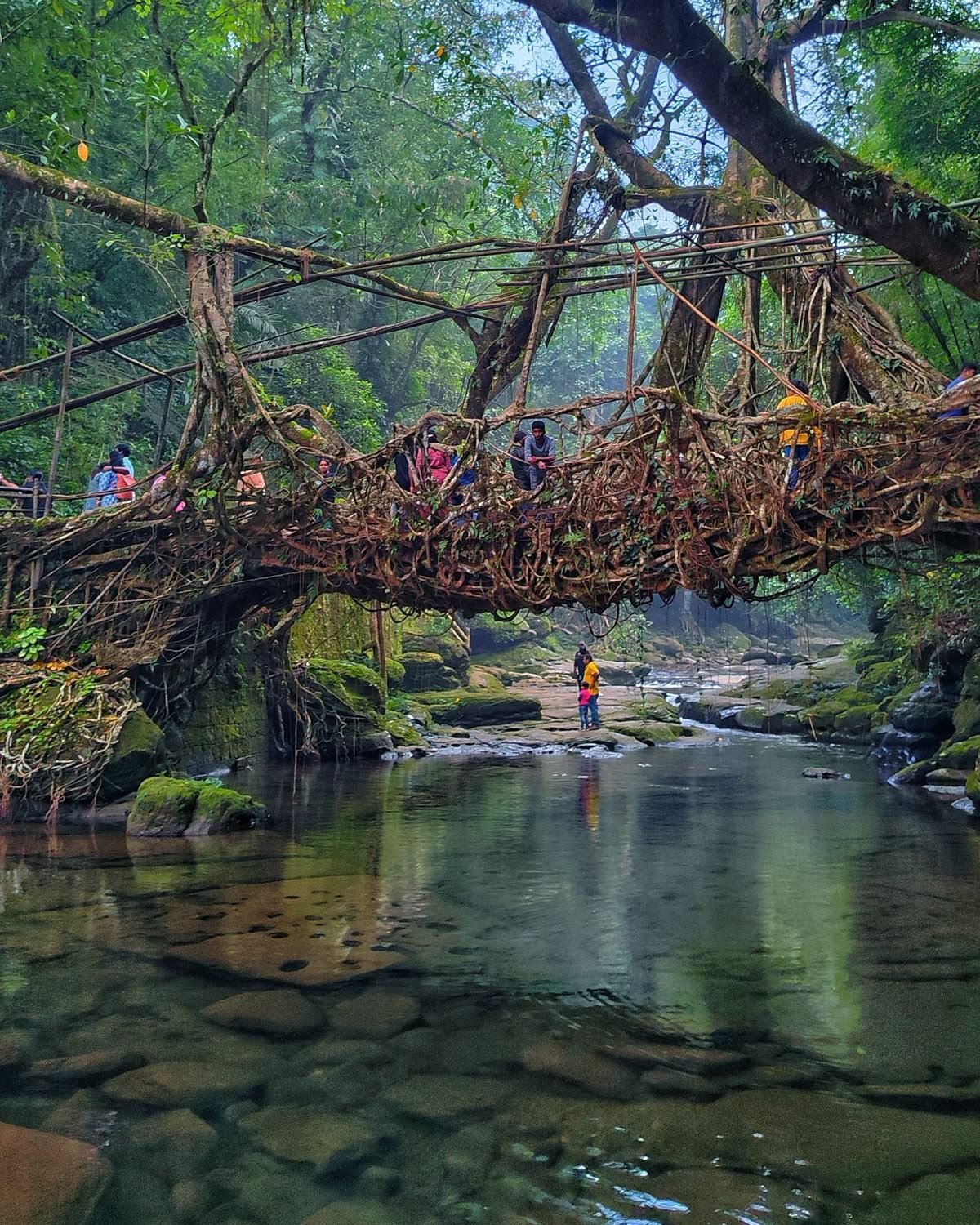
The Double Decker Living Root Bridge in Nongriat Village, Meghalaya
Deep in the rainforests of Meghalaya, the Khasi and Jaintia tribes have been growing bridges from the aerial roots of rubber trees for over 500 years. These living architectural wonders are not just functional but represent a perfect harmony between humans and nature, showcasing indigenous knowledge that modern engineering is only beginning to appreciate.
A Marvel of Bio-Engineering
The living root bridges of Meghalaya are perhaps one of the most remarkable examples of bio-engineering in the world. Unlike conventional bridges built from steel, concrete, or wood, these bridges are grown from the aerial roots of the Ficus elastica, commonly known as the Indian rubber tree. The Khasi people have mastered this ancient technique, creating structures that become stronger with age rather than deteriorating.
The process begins with young saplings planted on either side of a river or gorge. As the tree grows, its aerial roots are carefully guided across the gap using bamboo scaffolding and betel nut tree trunks hollowed out to serve as root-guidance systems. This painstaking process takes 10-15 years before the bridge becomes functional, and another 10-20 years to reach full strength.
The Famous Double Decker Bridge
The most famous of these natural wonders is the Double Decker Living Root Bridge in Nongriat village, about 3 kilometers from Tyrna village. This two-tiered bridge is over 180 years old and can support the weight of 50 people at once. The trek to reach this marvel is an adventure in itself, involving a steep descent of about 3,000 steps through dense tropical rainforest.
"Standing on the Double Decker Bridge, you realize you're not just on a bridge – you're on a living testament to the ingenuity of the Khasi people and their deep understanding of nature."
- Local Guide, Nongriat Village
Best Time to Visit
The ideal time to visit the living root bridges is during the post-monsoon period from October to February when the weather is pleasant and the forest is lush green. The monsoon season (June to September) makes the trek challenging due to slippery paths, though the bridges and surrounding landscape are at their most beautiful.
- October to December: Clear skies, pleasant weather, perfect for photography
- January to February: Cool weather, ideal for trekking
- March to May: Warmer weather but still manageable
- June to September: Monsoon season, challenging but spectacular
Planning Your Trek
Reaching the Double Decker Bridge requires moderate to good fitness levels. Here's what you need to know:
Trek Details:
- Distance: 6 km round trip from Tyrna village
- Duration: 5-7 hours including breaks
- Difficulty: Moderate to challenging
- Descent: Approximately 3,000 steps down (and back up!)
What to Bring:
- Comfortable trekking shoes with good grip
- Water bottles (at least 2 liters per person)
- Energy snacks and packed lunch
- Rain jacket (weather can change quickly)
- First aid kit
- Camera with extra batteries
Conservation Efforts
These living bridges face threats from increasing tourism, climate change, and urbanization. The Khasi community, along with conservation organizations, is working to protect this unique heritage. Visitors are encouraged to follow eco-friendly practices and respect local customs.
Several initiatives are underway to document the traditional knowledge of bridge-building and train younger generations to continue this practice. The Meghalaya government has also recognized these bridges as important cultural and natural heritage sites.
Beyond the Double Decker
While the Double Decker Bridge gets most attention, Meghalaya has over 100 living root bridges scattered across the Khasi Hills. Some other notable ones include:
- Single Decker Bridge at Nongriat: Located near the famous double decker
- Umshiang Bridge: A 53-meter-long bridge, one of the longest
- Mawlynnong Bridge: Near Asia's cleanest village
- Ritymmen Bridge: A lesser-known gem with fewer crowds
Cultural Significance
For the Khasi people, these bridges represent more than just transportation infrastructure. They embody the community's philosophy of living in harmony with nature. The bridges are maintained collectively by villages, reflecting the strong community bonds and traditional governance systems of the Khasi society.
The knowledge of building these bridges is passed down orally from generation to generation, making each bridge a repository of ancestral wisdom and cultural identity.
Photography Tips
The living root bridges offer incredible photography opportunities. Here are some tips for capturing these natural wonders:
- Early morning light (7-9 AM) provides the best illumination
- Use a polarizing filter to reduce glare from wet surfaces
- Capture the scale by including people in your shots
- Long exposure shots of the nearby waterfalls create stunning effects
- Don't forget to photograph the journey - the forest trek is equally spectacular
Conclusion
The living root bridges of Meghalaya are more than just tourist attractions; they are living symbols of sustainable development and indigenous innovation. As we face global environmental challenges, these bridges offer valuable lessons about working with nature rather than against it.
A visit to these natural wonders is not just a trek through beautiful landscapes but a journey into the heart of Khasi culture and an encounter with one of humanity's most remarkable achievements in bio-engineering. Every step on these living bridges connects you to centuries of indigenous knowledge and the enduring power of human creativity.